
Find Alabama Criminal Court Records Online
Circuit Court Clerks maintain Alabama criminal court records. The state has 67 counties. Each county has a clerk. Circuit Courts handle felony prosecutions. District Courts handle misdemeanor cases. The Alacourt ACCESS system provides online searching for court records statewide. It covers civil, criminal, domestic, and traffic cases. Case files include charges, court dates, dispositions, sentences, and related documents. These records are public under Alabama Code § 36-12-40. You can request copies. Provide the defendant name, case number, or filing date.
Quick Facts
Primary Sources for Alabama Criminal Court Records
Alacourt ACCESS V2.0
The Alacourt system is Alabama's main statewide criminal court records database. Run by the Alabama Administrative Office of Courts, this read-only subscription-based tool gives access to all state trial court records from all 67 counties. Users can search by name, case number, business name, or attorney name to find criminal, civil, domestic, and traffic cases.
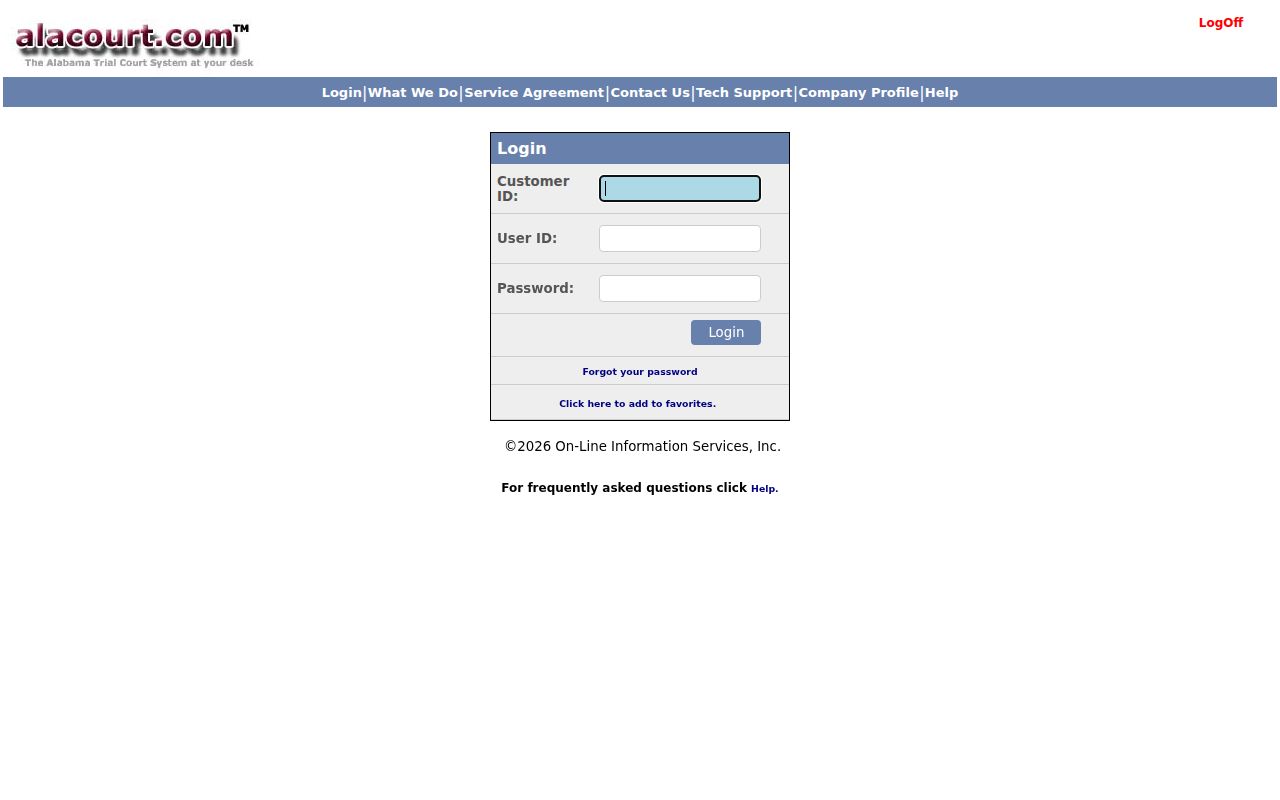
Alacourt returns case summaries showing charges, docket entries, dispositions, sentences, court dates, parties, attorneys, and scanned document images where available. The system covers Circuit Courts, District Courts, and many Municipal Courts across the state. Access requires creating an account and purchasing a subscription through the Administrative Office of Courts. Contact the AOC at (334) 954-5000 or 1-866-954-9411 for subscription information. Visit www.alacourt.gov for more details.
Circuit Court Clerks
Each county has an elected Circuit Court Clerk. The clerk keeps all felony criminal case records. Circuit Clerks maintain original case files, docket sheets, and judgments. All documents filed in Circuit Court are kept. Under Alabama Code § 12-11-30, Circuit Courts have exclusive original jurisdiction over all felony prosecutions and misdemeanor violations which are lesser included offenses within a felony charge.
Visit the Circuit Court Clerk's office to access records in person. Go to your county courthouse. Most courthouses are open Monday through Friday. Hours are usually 8:00 AM to 4:30 PM or 5:00 PM. Clerks can search by defendant name or case number. Some larger counties have public computer terminals. You can search yourself. Smaller rural counties may need clerk help to find files.
District Court Clerks
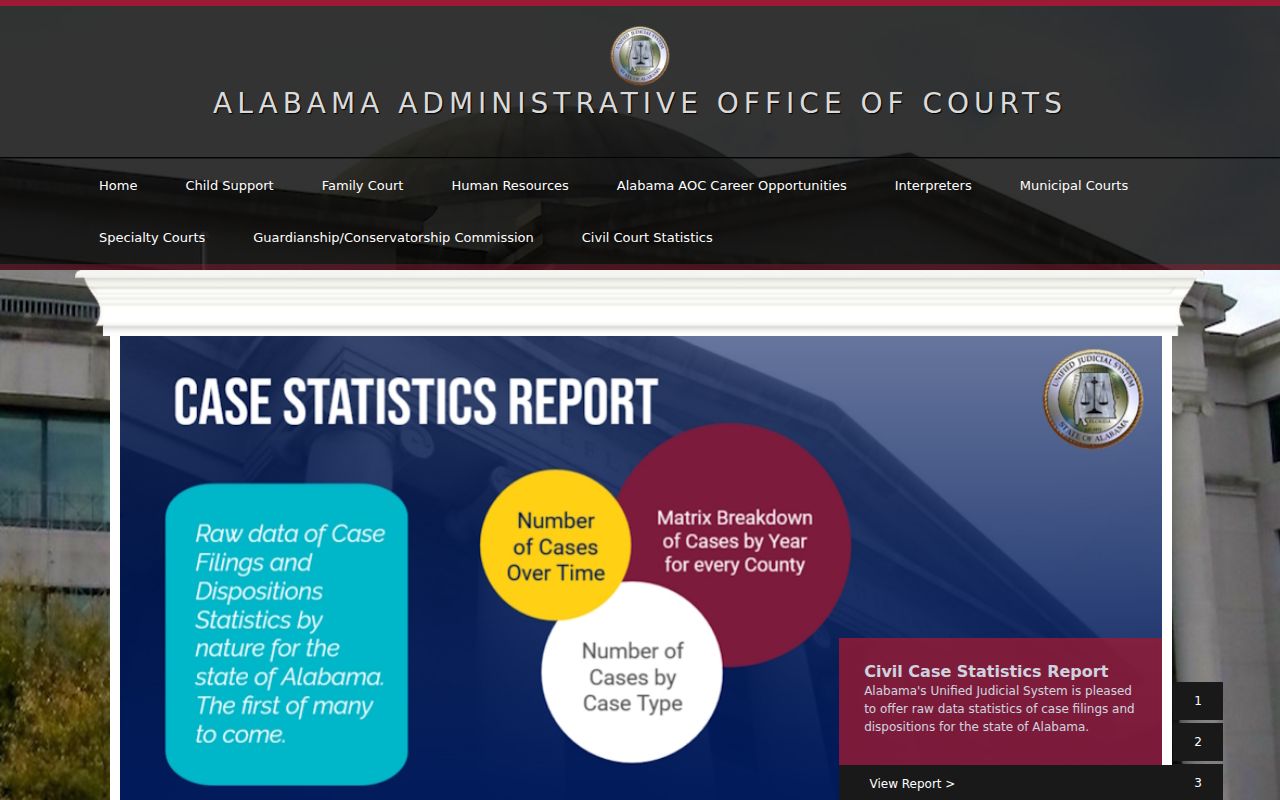
District Court Clerks maintain records for misdemeanor cases and preliminary hearings in felony cases. The district court has exclusive original trial jurisdiction over prosecutions of all offenses defined by law or ordinance as misdemeanors. District courts also hold preliminary hearings in prosecutions for felonies and may exercise concurrent jurisdiction with circuit courts to receive guilty pleas in non-capital felony cases. District Court offices are located at county courthouses, though they operate as separate offices from Circuit Clerks.
Alabama Law Enforcement Agency
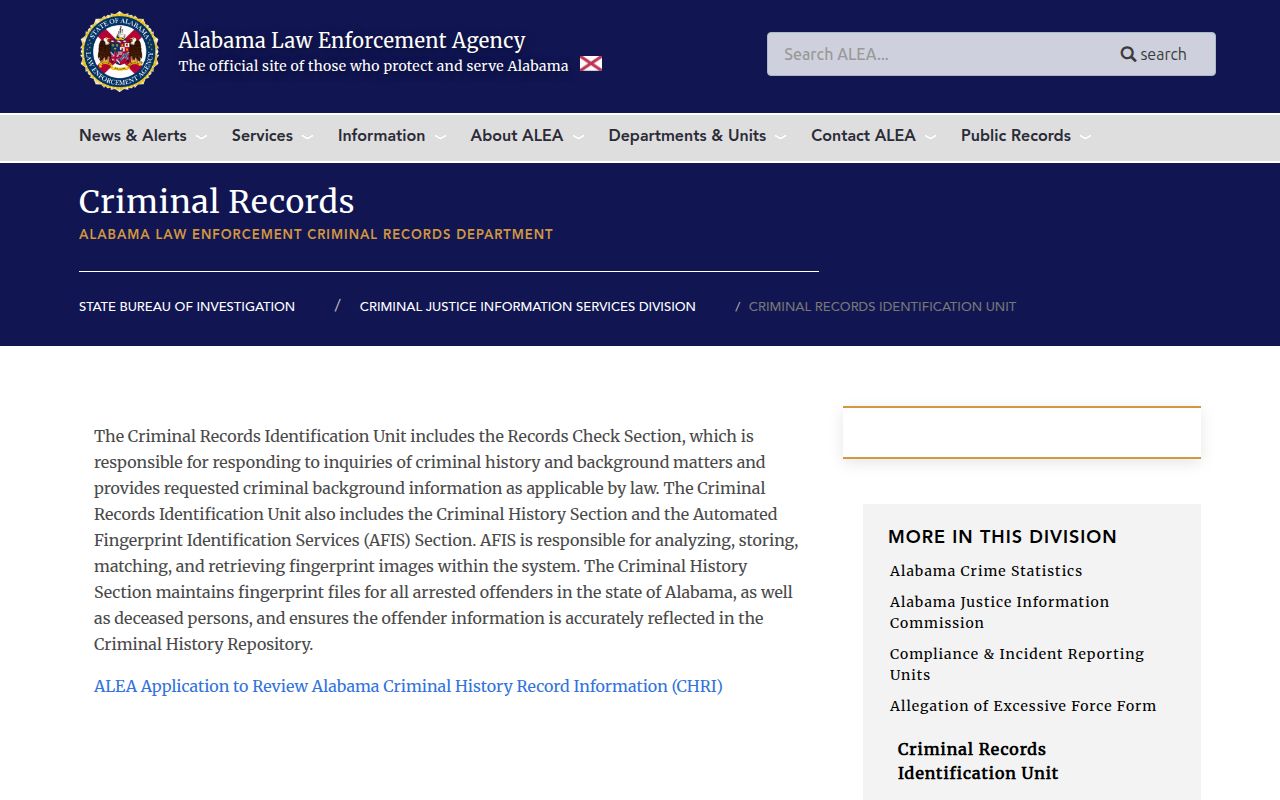
ALEA runs the Criminal Records Identification Unit. This is the central state hub for Alabama criminal history information. The Criminal Records Unit gives official background checks for employment screening, licensing, firearms buys, and other legal uses. To request a background check, applicants must submit fingerprints taken by an authorized law enforcement agency with an FBI-issued ORI number. Visit www.alea.gov or call 1-866-740-4762 Monday through Friday from 8:00 AM to 5:00 PM CST.
Fees and Costs
ALEA Criminal Background Checks
Standard background checks cost $25. Each extra copy costs $5. Online requests through third-party vendors typically add a $15 processing fee. Payment must be by money order or cashier's check payable to ALEA.
Court Record Copy Fees
Copy fees are set by individual Circuit Clerks and vary by county. Per-page copies typically range from $0.25 to $1.00 per page. Certified copies need an extra certification fee of $1 to $5 per document. Some counties charge search fees. Others do not. Mailing fees are added if records must be sent by mail. Contact the specific county Circuit Clerk for current fee schedules.
Alacourt Subscription Fees
Alacourt ACCESS V2.0 subscription fees vary based on usage level. The cost depends on how many searches you plan to run each month. Subscriptions are billed monthly or annually. Monthly plans offer flexibility if you need access for a short time. Annual subscriptions typically cost less per month. Attorneys, law firms, title companies, and background check services are common subscribers. The Administrative Office of Courts can provide a detailed pricing sheet. Call 1-866-954-9411 to speak with a subscription representative. They can help you pick the right plan for your needs.
Expungement Fees
An administrative filing fee of $500 must be paid when filing an expungement petition. This fee is a statutory requirement and is distributed among multiple state agencies including the State Judicial Administrative Fund, Alabama Department of Forensic Sciences, district attorney's office, circuit court clerk's office, Public Safety Fund, state General Fund, Education Trust Fund, and Fair Trial Tax Fund. Courts may waive fees only if they find the arrest had no foundation of probable cause.
Secondary Sources for Criminal Information
Alabama Department of Corrections
ADOC keeps records on all inmates in Alabama state prisons. The department runs a free online inmate search database at doc.alabama.gov that lets the public search for current inmates by name or AIS (Alabama Institutional Serial) number. The system shows custody status, facility location, sentence information, and expected release dates. The database does not include county jail inmates, Youthful Offender Act sentences, or historical data on inmates who have already been released.
Alabama Sex Offender Registry
ALEA operates Alabama's sex offender registry under the Alabama Sex Offender Registration and Community Notification Act (Title 15, Chapter 20A). The public can search the registry at www.communitynotification.com. The registry includes over 16,000 registered sex offenders in Alabama with photographs, addresses, physical descriptions, specific sex offense convictions, and registration status. Local sheriffs register offenders at the county level and forward information to the ALEA state repository. The registry is updated daily.
Alabama Appellate Courts
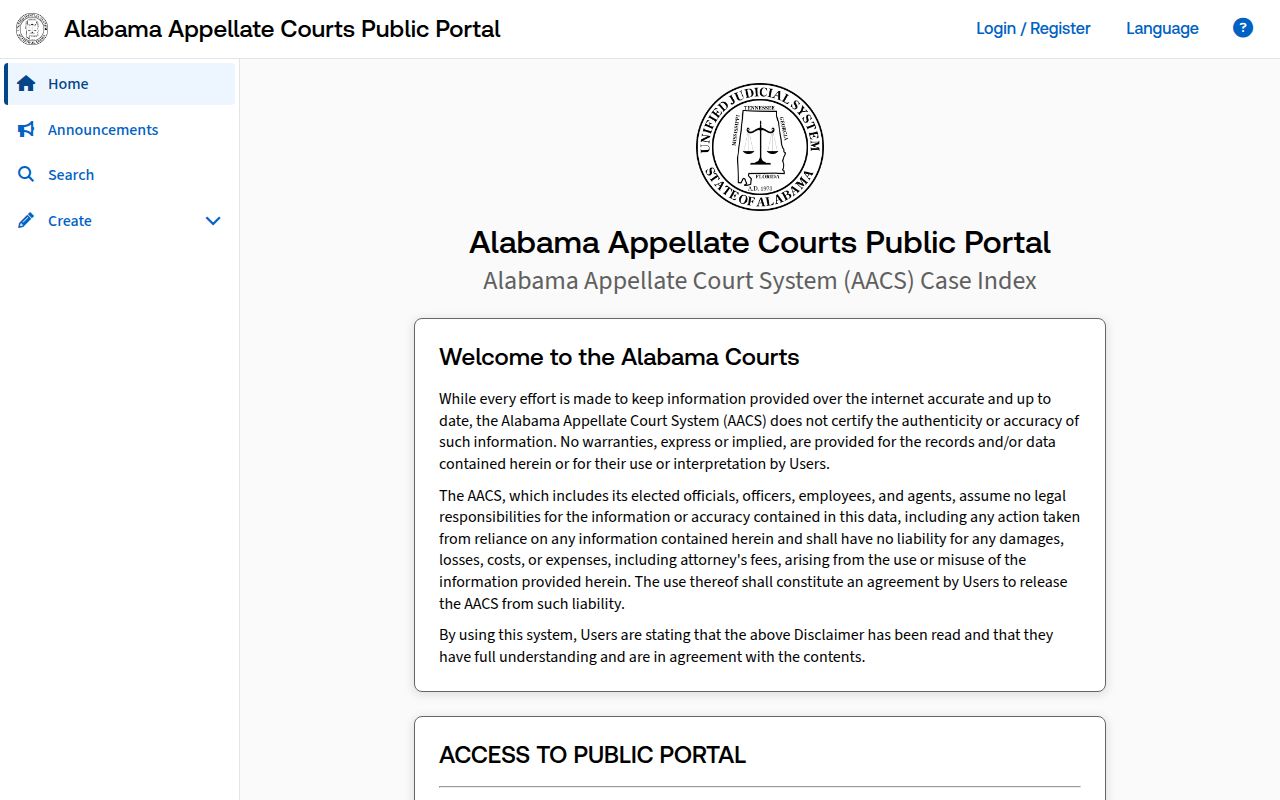
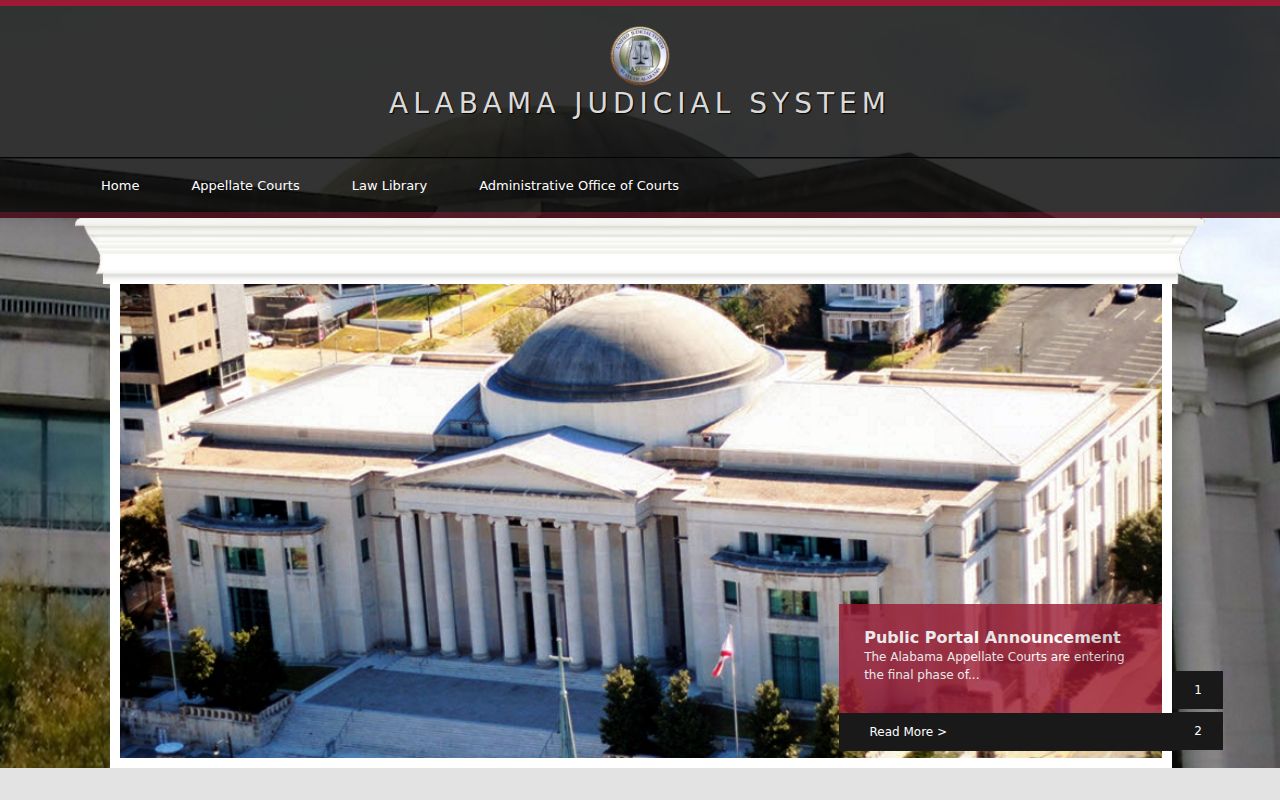
The Alabama Appellate Courts Public Portal provides free access to appellate court records, opinions, and case information at publicportal.alappeals.gov. This portal covers the Alabama Supreme Court, Court of Criminal Appeals, and Court of Civil Appeals. Users can search by party name, case number, or attorney to find appellate decisions in criminal cases.
Federal Criminal Cases
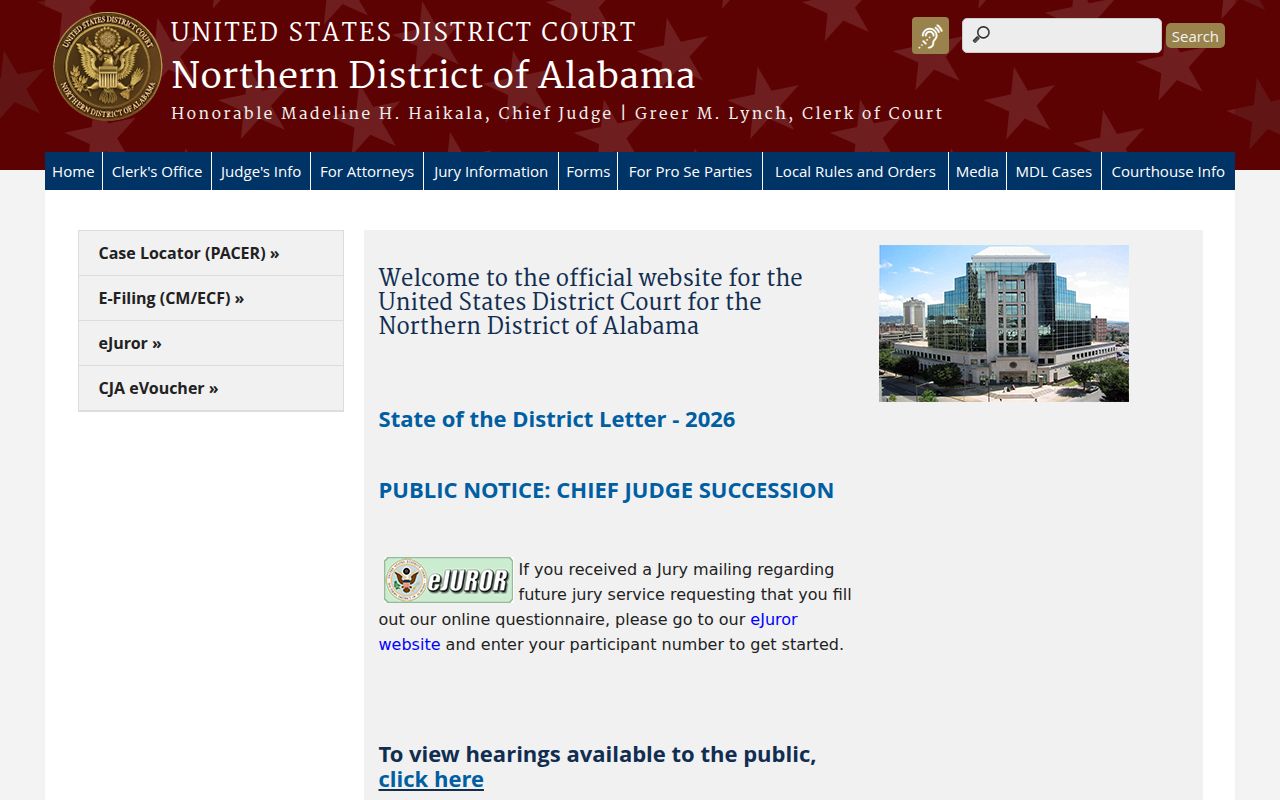
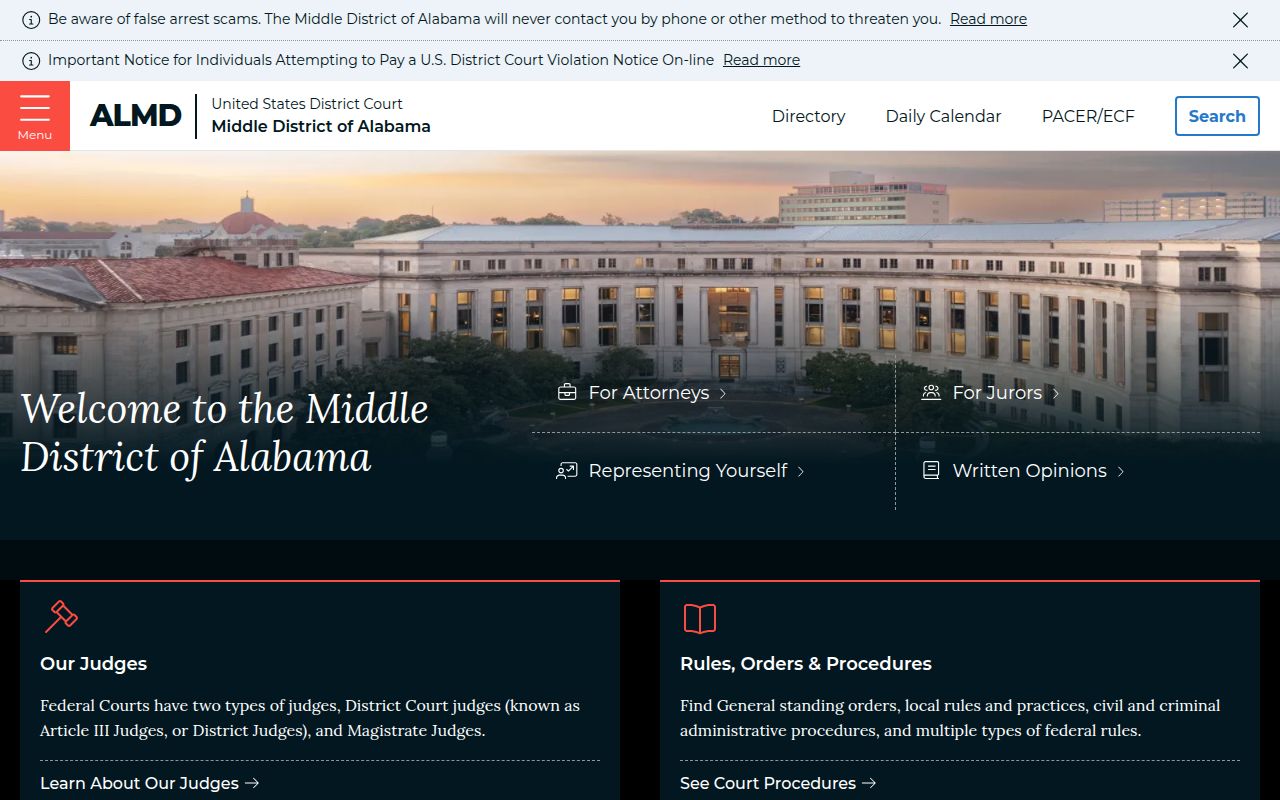
Three U.S. District Courts handle federal criminal prosecutions in Alabama. The Northern District (www.alnd.uscourts.gov) covers 31 counties including Birmingham, Huntsville, and Tuscaloosa. The Middle District (www.almd.uscourts.gov) covers 23 counties including Montgomery, Dothan, and Opelika. The Southern District (www.alsd.uscourts.gov) covers 13 counties including Mobile and Baldwin County.
Federal court records are accessed through PACER (Public Access to Court Electronic Records) at pacer.uscourts.gov. PACER is a subscription service charging $0.10 per page with a $3.00 maximum per document. Accounts with less than $30 in quarterly charges are waived. Users must create a PACER account to search federal court records. Contact the PACER Service Center at 1-800-676-6856 for assistance.
Additional Research Resources
Alabama E-Filing System
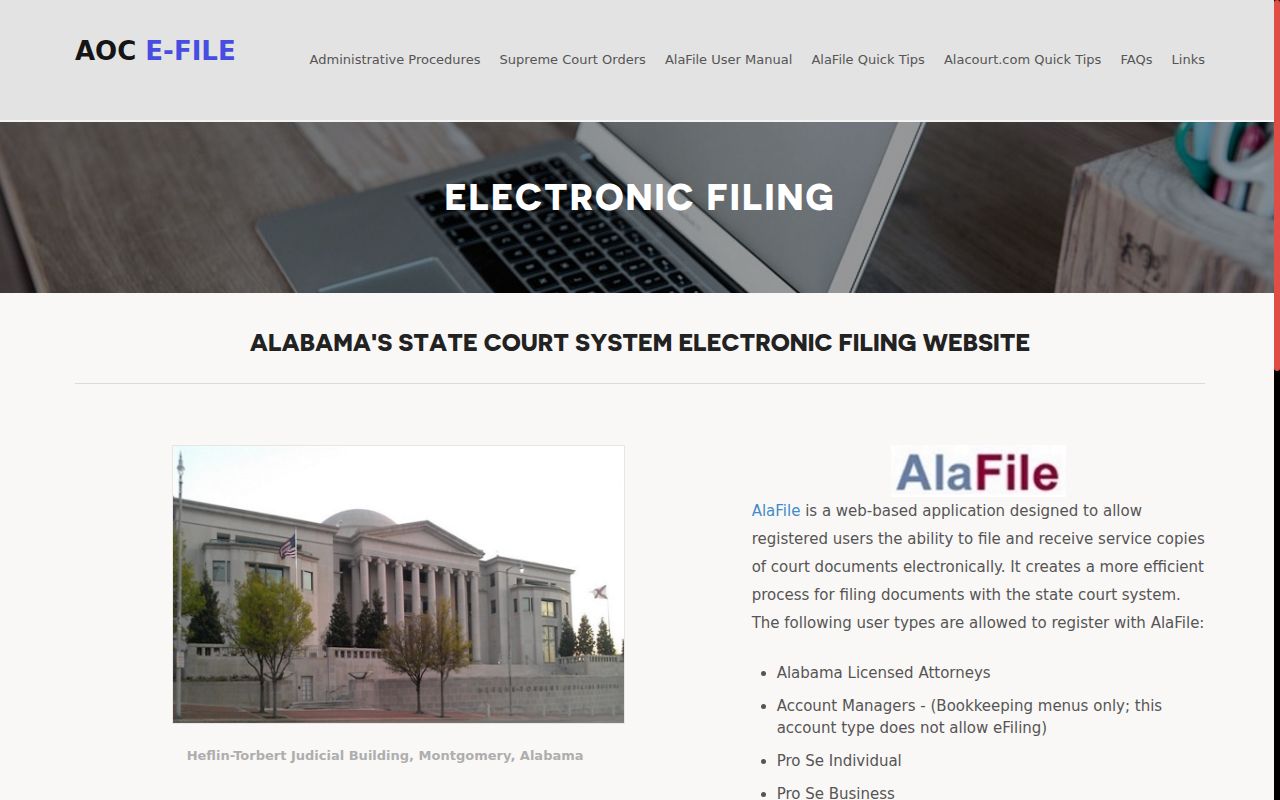
The AlaFile system at efile.alacourt.gov is an electronic filing platform for court documents. Registered attorneys and parties can file documents electronically and receive notifications. While primarily a filing tool rather than a public search database, AlaFile provides registered users with access to case documents in their matters.
Sheriff's Office Jail Records
County sheriffs maintain jail records showing current inmates in county jails. Under Alabama Code § 36-22-8, sheriffs must keep a well-bound record book showing each prisoner's name, age, sex, description, charge, and commitment and release dates. This book must be available for public inspection during office hours. Many sheriff's offices provide online jail rosters on their websites.
Alabama Legislature - Code of Alabama
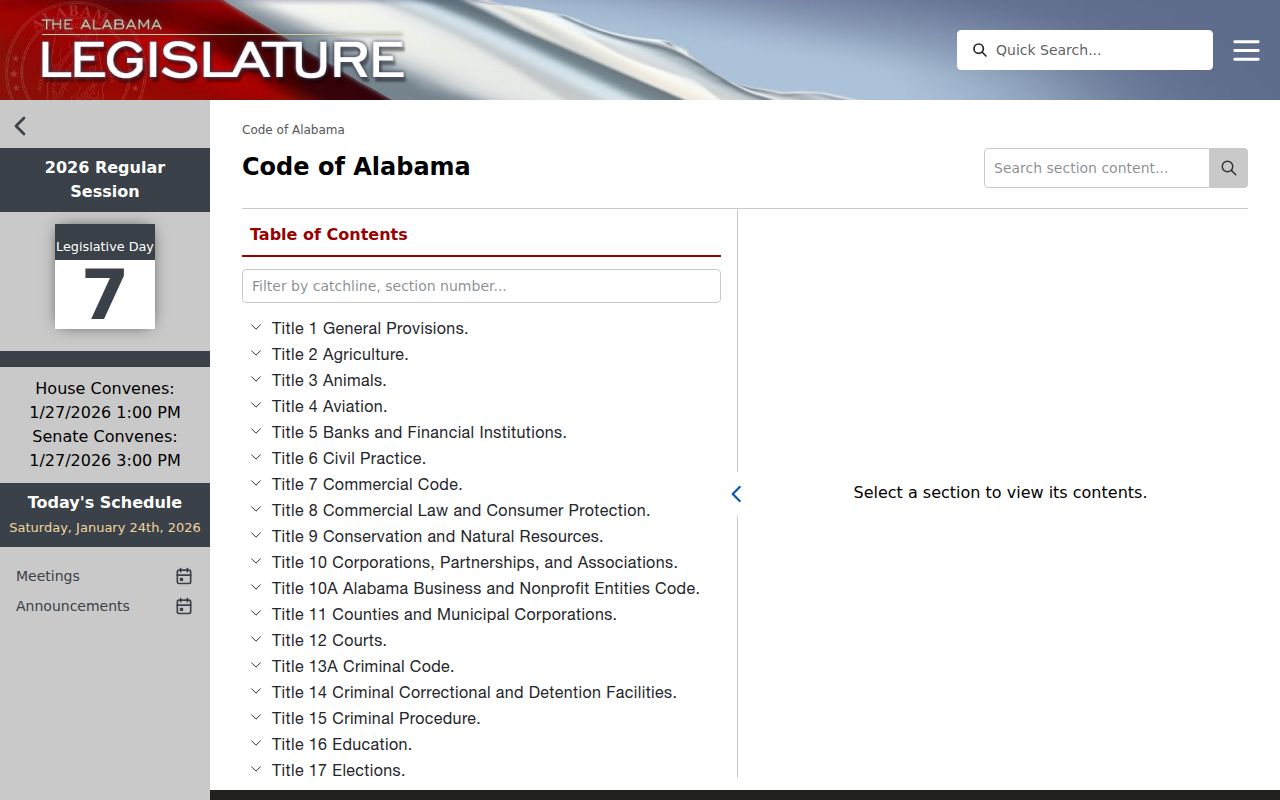
The official Code of Alabama is available at alison.legislature.state.al.us. The site provides access to all Alabama statutes, including Title 13A (Criminal Code), Title 14 (Criminal Correctional and Detention Facilities), and Title 15 (Criminal Procedure). Understanding relevant statutes helps researchers interpret criminal court records and identify what information should be available.
Legal Aid and Bar Resources
The Alabama State Bar at www.alabar.org provides a lawyer referral service at 1-800-392-5660. Legal Services Alabama offers free civil legal aid at legalservicesalabama.org for qualifying low-income families, though criminal defense cases are not covered. The University of Alabama Criminal Defense Clinic provides limited free legal defense for misdemeanor charges.
Legal Framework Governing Criminal Court Records
Public Access Laws
The foundation of public access is Alabama Code § 36-12-40, which establishes that every Alabama resident has the right to inspect and take a copy of any public record of this state, except as otherwise expressly provided by law. This statute creates the presumption that criminal court records are public documents accessible to anyone who requests them.
Privacy and Confidentiality
On January 1, 2025, new Alabama Rules of Court-Record Privacy and Confidentiality took effect statewide. These Rules apply to all appellate, circuit, district, juvenile, municipal, and probate courts. The Rules establish that while the public has a general right to inspect court records, certain information is designated as privileged or confidential. The Rules outline 91 categories of information designated as privileged or confidential in Alabama. Alabama Code § 41-9-642 protects criminal history information from disclosure to anyone who lacks the "need to know" or "right to know" as determined by the Alabama Justice Information Commission.
Expungement and Record Sealing
Alabama's expungement framework allows certain criminal records to be removed from public access. Alabama Code § 15-27-1 permits expungement of misdemeanor records when charges are dismissed with prejudice, no billed by a grand jury, the person is found not guilty, or charges are nolle prossed without being refiled. Persons convicted of nonviolent misdemeanors may qualify for expungement if all probation requirements are completed, all fines paid in full, and three years have elapsed since conviction. Only two misdemeanor convictions can be expunged in Alabama.
Alabama Code § 15-27-2 governs felony expungement. Felony charges may be expunged when dismissed with prejudice, no billed, or nolle prossed after 90 days. Convicted felons may qualify for expungement only after receiving a certificate of pardon with restoration of civil and political rights from the Board of Pardons and Paroles. The conviction must not be a violent offense, sex offense, or offense involving moral turpitude.
Alabama Code § 12-15-103 governs the sealing of juvenile delinquency records. Courts shall seal juvenile records when two years have elapsed since final discharge and the person has not been convicted of a felony or misdemeanor involving moral turpitude since the juvenile case closed.
Court Jurisdiction
Criminal cases are divided between courts based on offense severity. Alabama Code § 12-11-30 grants Circuit Courts exclusive original jurisdiction over all felony prosecutions. This means serious crimes like murder, robbery, burglary, and drug trafficking are prosecuted in Circuit Court. Alabama Code § 12-12-32 gives District Courts exclusive jurisdiction over misdemeanor prosecutions outside city limits, such as DUI, assault in the third degree, and theft under $500.
Record-Keeping Requirements
Court clerks have specific legal duties under Alabama Code § 12-17-94. Circuit Court Clerks must maintain consolidated docket sheets of all criminal cases, including the names of parties, the character of the offense, names of attorneys, and the sheriff's return. Clerks must keep all papers, books, dockets, and records with care and security, with papers filed, arranged, numbered, and labeled for easy reference.
Browse by Location
Search by County
Alabama's 67 counties each maintain their own criminal court records through elected Circuit Court Clerks. Each clerk runs an independent office at the county seat. Records are stored at the county courthouse where the case was filed. This decentralized system means you need to know which county handled the case before you start your search. If you're not sure which county has the records you need, the Alacourt statewide database can search all counties at once. This saves time when you don't know the exact filing location.
View All 67 Alabama Counties →
Search by City
Major Alabama cities are served by their county Circuit Court systems. Birmingham, Huntsville, Mobile, Montgomery, and Tuscaloosa are the five largest cities in the state. Residents file criminal cases in the county courthouse serving their jurisdiction. For example, Birmingham cases go to Jefferson County Circuit Court. Huntsville cases are filed in Madison County. Each city links to its county's court system. City residents don't have separate city courts for felony cases. All felonies are handled at the county level per state law.
Start Your Criminal Court Records Search
Use the search tool below to access criminal court record information from across Alabama.